Ever walk into your home and catch a whiff of something… not quite right? Maybe it’s the lingering aftermath of a delicious cooking experiment, the subtle presence of a neighbor’s bonfire, or the more persistent reminder of wildfire smoke creeping in. Whatever the source, smoke in your home is more than just an unpleasant odor; it’s a silent intruder carrying microscopic particles and harmful gases that can impact your health and comfort. Finding the best air purifier for smoke isn’t just about making your home smell better; it’s about reclaiming truly clean air.
At CleanAir Home, we understand the critical need for effective indoor air solutions. We’re here to help you navigate the world of air purification, ensuring you choose a system that truly clears the air, transforming your living space into a sanctuary of freshness.
|
Our Picks for the Best Air Purifier in 2026
As an Amazon Associate I earn from qualifying purchases.
|
||
| Num | Product | Action |
|---|---|---|
| 1 | LEVOIT Air Purifier for Home Allergies Pet Hair in Bedroom, Covers Up to 1073 ft² by 56W High Torque Motor, AHAM VERIFIDE, 3-in-1 Filter with HEPA Sleep Mode, Remove Dust Smoke Odor, Core300-P, White |

|
| 2 | KNKA Genuine Air Purifier Replacement Filter, True HEPA Filter Compatible with APH30000 for High-Efficiency Air Filtration, Odor and Smoke Reduction, Pet Dander Version, 2 Pack |
|
| 3 | AIRDOCTOR 3000 Series (AirDoctor 3000) |
|
| 4 | GermGuardian 4-In-1 HEPA Air Purifier for Home, Large Rooms Up To 743 Sq. Ft. with HEPA Air Filter, UV-C Light & Odor Reduction, AC4825E, 22\" Tower, Gray |
|
| 5 | KNKA Air Purifier for Home Bedroom Large Room Up to 3,500 Ft², HEPA Air Cleaner with Washable Pre-Filter, AHAM VERIFIDE, AQI Display, ECO Mode, Pet Mode for Pets, Allergies, Dust, Pollen, APH4000 |
|
| 6 | LEVOIT Air Purifier for Home Large Room Up to 1073Ft² with Air Quality Monitor, AHAM VERIFIDE, Smart WiFi, Washable Pre-Filter, HEPA Sleep Mode for Pets, Allergies, Dust, Pollen, Vital 100S-P, White |
|
| 7 | Air Purifiers for Home with H13 True HEPA Filter Up to 1076 Ft² for Pet Hair, Odors, Pollen, Smoke, Compact Air Cleaner with 3 Speeds, Timer, Aroma Quiet 360°Intake Filter, White |
|
| 8 | 3 Pcs 2026 New Magair Air Purifier For M0ld, Magair Air Purifier Plug In No Filter Replacement, Mag Air Purifiers, Living Room,Pet Room, Air Purifiers For Bedroom |
|
| 9 | Plug In Negative Ion Air Purifier, with Colorful Night Light, with One Replacement Filter, for Home, Kitchen, Bathroom,Toilet |
|
| 10 | LEVOIT Air Purifiers for Bedroom Home Dorm, 3-in-1 Filter Cleaner with Fragrance Sponge for Better Sleep,Portable Filters Smoke, Allergens, Pet Dander, Odor, Dust, Office, Desktop, Core Mini-P, White |
|
Understanding Smoke: More Than Just a Smell
Before we dive into solutions, let’s get real about what smoke actually is. It’s not a single entity but a complex cocktail of airborne particulate matter and a variety of gases, all released when something burns. Think about it:
- Particulate Matter (PM): These are tiny solid and liquid particles suspended in the air. We often talk about PM2.5, which refers to particles 2.5 micrometers or smaller in diameter. Smoke particles, particularly from sources like tobacco or wildfires, can be even smaller, often ranging from 0.01 to 1 micron. These are invisible to the naked eye but pose a significant threat because they can bypass your body’s natural defenses and embed deep within your lungs.
- Gaseous Pollutants: Alongside particles, smoke releases harmful gases like volatile organic compounds (VOCs), carbon monoxide, nitrogen oxides, and sulfur dioxide. These are the culprits behind the persistent, stale odors that cling to your furniture, curtains, and even your clothes.
Exposure to smoke, whether short-term or long-term, can wreak havoc on your health. It can trigger asthma attacks, worsen respiratory conditions, cause eye and throat irritation, and contribute to more serious long-term cardiovascular and lung diseases. While opening a window might seem like a quick fix, it often isn’t enough to tackle the sheer volume and minuscule size of smoke pollutants, especially if the outdoor air quality is already compromised.
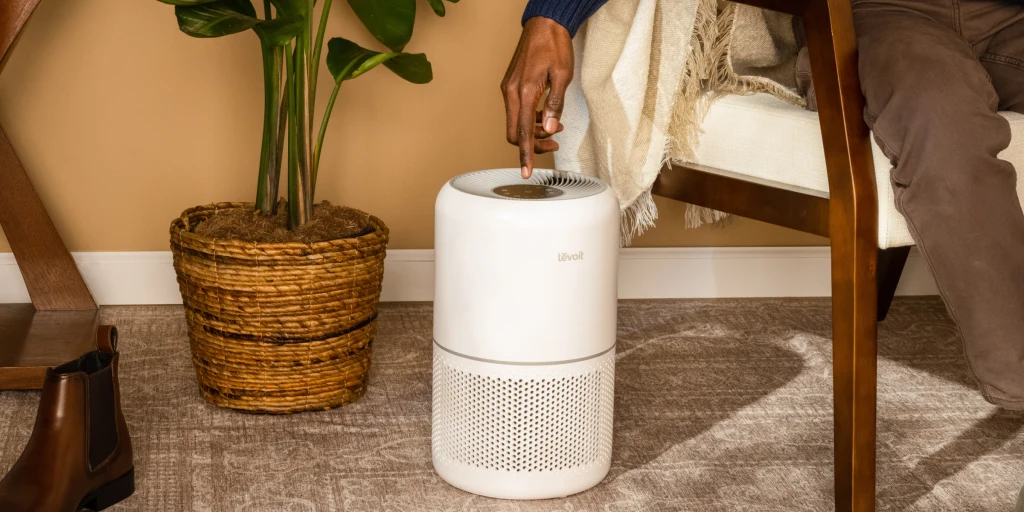
The Dynamic Duo: HEPA and Activated Carbon Filters
When it comes to battling smoke, two filtration technologies stand head and shoulders above the rest: HEPA and activated carbon. Think of them as the tag team champions of clean air.
HEPA Filters: Trapping the Tiniest Invaders
HEPA stands for High-Efficiency Particulate Air, and it’s the gold standard for capturing airborne particles. A true HEPA filter is certified to capture at least 99.97% of airborne particles as small as 0.3 microns. Why 0.3 microns? Because it’s considered the “Most Penetrating Particle Size” (MPPS), meaning particles both larger and smaller are captured even more effectively.
Here’s why HEPA is crucial for smoke:
- Microscopic Precision: Smoke particles are tiny, often well within the range that HEPA filters are designed to trap. Many advanced units feature medical-grade HEPA 13 filters, which can capture an even higher percentage of particles as small as 0.1 microns, offering superior protection against ultrafine smoke.
- Invisible Defense: These filters physically ensnare the solid components of smoke, preventing them from entering your lungs. This includes wildfire ash, tobacco residue, and cooking soot.
Without a robust HEPA filter, you’re missing the fundamental layer of defense against the physical irritants in smoke.
Activated Carbon: Neutralizing Odors and Gases
While HEPA filters are particle-capturing maestros, they can’t effectively deal with gases or odors. That’s where activated carbon steps in. Activated carbon is a highly porous material treated to create millions of tiny pores, dramatically increasing its surface area.
How does it work? Through a process called adsorption. Unlike absorption, where a substance soaks into another, adsorption means gases and odors physically bind to the surface of the carbon.
- Odor Elimination: Activated carbon is a powerhouse for neutralizing offensive smoke smells, whether from cigarettes, cigars, cooking mishaps, or lingering wildfire haze.
- VOC Removal: It effectively captures gaseous pollutants, including the harmful VOCs and other chemical compounds found in various types of smoke.
Here’s a critical insight from Dr. Anya Sharma, an esteemed Environmental Health Specialist:
“For truly comprehensive smoke removal, you need both a high-efficiency HEPA filter and a substantial activated carbon filter. The HEPA tackles the particulate matter, but it’s the sheer volume of activated carbon that determines how effectively an air purifier can eliminate those stubborn smoke odors and harmful gases that impact long-term health.”
Beware of air purifiers with only a thin layer of activated carbon; for effective smoke odor removal, you need a filter with a significant amount of pellet-based activated carbon, often measured in pounds, not ounces. This ensures maximum adsorption capacity and longevity.
Beyond the Filters: Key Features for Smoke-Fighting Prowess
Choosing the right filters is paramount, but a few other features elevate an air purifier from good to great when tackling smoke.
CADR and Room Size: Matching the Purifier to Your Space
Understanding your room size and an air purifier’s Clean Air Delivery Rate (CADR) is crucial.
- What is CADR? CADR measures how quickly an air purifier removes three common pollutants: smoke, dust, and pollen. A higher CADR indicates faster cleaning. For smoke, prioritize a high smoke CADR rating.
- Room Coverage and ACH: Manufacturers often list a maximum room size. However, always look for air purifiers that specify their coverage based on at least 4.8 Air Changes per Hour (ACH) for your room size. This means the purifier can clean all the air in your room nearly five times every hour, which is essential for rapidly clearing smoke. An air purifier that is too small for your space simply won’t keep up with smoke pollution.
Pre-filters: Extending Filter Life
A good multi-stage filtration system will always include a pre-filter. This initial layer captures larger particles like dust, pet dander, and hair, preventing them from clogging the more delicate HEPA and carbon filters. This significantly extends the lifespan and efficiency of your primary filters, saving you money and maintenance headaches in the long run.
Smart Features & Auto Mode: Convenience and Responsiveness
Modern air purifiers often come with intelligent features that make managing your indoor air a breeze:
- Auto Mode: This feature allows the purifier to detect changes in air quality using built-in sensors and automatically adjust its fan speed. If cooking smoke suddenly fills the kitchen, the purifier will kick into high gear without you lifting a finger.
- App Control & Real-time Monitoring: Many devices connect to smartphone apps, letting you monitor your home’s air quality, change settings, and even receive filter replacement reminders from anywhere.
Noise Levels and Energy Efficiency
Let’s face it, nobody wants an air purifier that sounds like a jet engine in their living room. Look for models with quiet operation, especially at lower fan settings. Additionally, consider energy efficiency (often indicated by an Energy Star rating) to keep electricity bills in check, as air purifiers often run continuously.
Choosing Your Champion: What to Look for in a Smoke-Specific Air Purifier
Ready to find the ideal air purifier for your home? Here’s a checklist to guide your decision:
- Multi-Stage Filtration is a Must: Ensure it includes both a True HEPA filter (preferably medical-grade HEPA 13) and a substantial, pellet-based activated carbon filter.
- Carbon Weight Matters: Look for air purifiers that specify the weight of their activated carbon filter, ideally measured in pounds for serious smoke and odor removal.
- Match CADR to Room Size: Verify the smoke CADR and ensure the recommended room size is based on at least 4.8 ACH for your specific space.
- Pre-filter Included: This protects your more expensive HEPA and carbon filters.
- Smart Features for Convenience: Auto mode and app control can enhance usability and responsiveness.
- Consider Noise and Energy: Look for quiet operation and Energy Star certification.
Real-World Scenarios: Tackling Different Smoke Challenges
Air purifiers aren’t a one-size-fits-all solution, but the right model can address various smoke sources:
- Wildfire Smoke: This is a formidable adversary, containing a mix of organic particles and toxic chemicals. A robust HEPA filter to capture the fine particles combined with a heavy-duty activated carbon filter for VOCs and other gaseous pollutants is essential. Look for models with high CADR to clear air quickly during intense smoke events.
- Cigarette/Cigar Smoke: Tobacco smoke is notorious for its persistent odor and harmful ultrafine particles. A significant amount of activated carbon is non-negotiable here to adsorb the 250+ harmful chemicals and neutralize the lingering smell. HEPA filtration will capture the tar and nicotine particles.
- Cooking Odors: While often less harmful than wildfire or tobacco smoke, cooking smells can be tenacious. A good activated carbon filter will make short work of these, preventing your home from smelling like last night’s dinner.
Maintenance Matters: Keeping Your Air Purifier at Peak Performance
An air purifier is only as good as its filters. Neglecting maintenance can significantly reduce its effectiveness.
- Regular Pre-filter Cleaning: Most pre-filters are washable and should be cleaned monthly to prevent clogging and maintain airflow.
- Timely Filter Replacement: HEPA and activated carbon filters have a finite lifespan. Depending on usage and air quality, they typically need to be replaced every 6-12 months. Your air purifier’s indicator lights or smart app will usually alert you when it’s time. Ignoring these warnings means your purifier isn’t cleaning the air effectively.
Common Misconceptions About Smoke and Air Purifiers
Let’s clear the air on a few common myths:
- “Any Air Purifier Will Do for Smoke”: Absolutely not. Basic air purifiers might handle some dust, but they lack the specialized HEPA and ample activated carbon needed to combat the complex composition of smoke. You need a purpose-built system.
- “Ionizers or Ozone Generators are the Best”: While some air purifiers include ionizers or plasmawave technology, and ozone generators are sometimes marketed for odor removal, caution is advised. Ionizers can sometimes produce ozone, a lung irritant that can be harmful, especially for those with respiratory sensitivities. Our recommendation at CleanAir Home aligns with trusted research: stick to HEPA and activated carbon filtration, which are proven safe and highly effective without harmful byproducts.
Conclusion
Navigating the world of air purifiers for smoke might seem overwhelming, but with the right knowledge, you can make an informed decision that truly benefits your health and home. The key takeaways are simple yet powerful: prioritize multi-stage filtration featuring a high-efficiency HEPA filter for particles and a substantial, pellet-based activated carbon filter for odors and gases. Couple this with proper sizing for your room, and you’re well on your way to breathing easier.
Investing in the best air purifier for smoke isn’t just a purchase; it’s an investment in your well-being, creating an environment where you and your loved ones can thrive, free from the invisible threats of indoor smoke. Take the first step towards a healthier home today with CleanAir Home’s expert guidance and advanced air purification solutions.