In today’s world, where the air inside our homes can often be more polluted than the air outside, investing in a quality air purification system isn’t just a luxury – it’s a necessity for our well-being. The Dyson air purifier stands out as a prominent player in this field, blending cutting-edge technology with sleek design. But what truly makes a Dyson air purifier tick, and is it the right choice for your home? Let’s dive deep into the world of Dyson’s air-cleaning innovations.
What’s in the Air We Breathe Indoors?
Before we explore the solutions, it’s vital to understand the problem. Our homes, often seen as safe havens, can harbor a surprising array of pollutants. Think about it: pet dander, dust mites, pollen drifting in through open windows, cooking fumes, VOCs (Volatile Organic Compounds) from cleaning products and furniture, and even nitrogen dioxide from gas stoves. These microscopic invaders can contribute to allergies, asthma, and a general feeling of stuffiness or poor air quality. As Dyson microbiologist Monika Stuczen aptly puts it, “Just because it is out of sight does not mean it should be out of mind. Microscopic dust particles like pet dander and dust mite allergens may impact your wellbeing.”
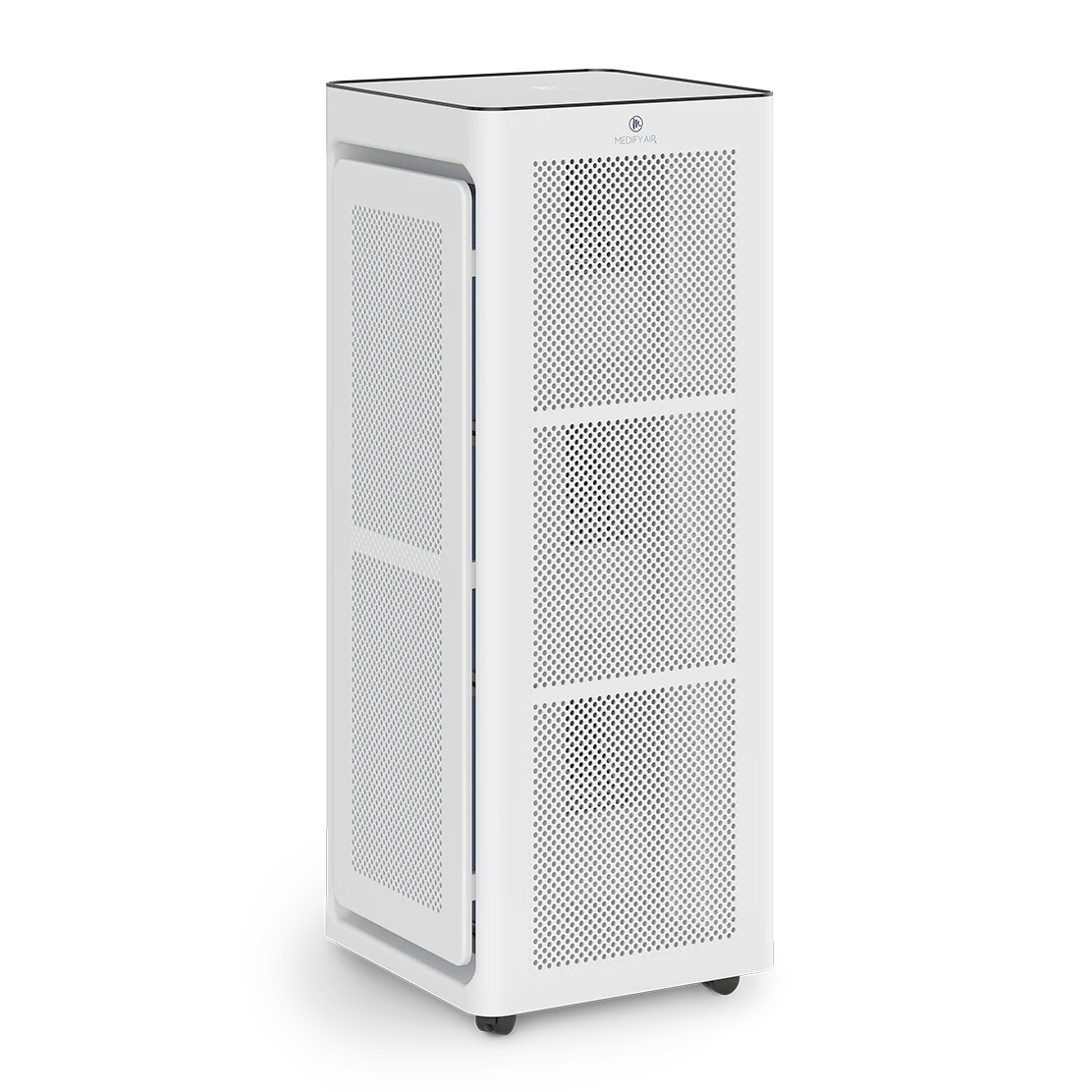
The Science Behind a Dyson Air Purifier
Dyson air purifiers are engineered with a sophisticated approach to tackle these indoor air challenges. At their core, these machines are designed to continuously sense, capture, and project purified air throughout a room.
Filtration That Goes Beyond the Surface
The heart of any air purifier is its filtration system, and Dyson doesn’t cut corners here. Most Dyson air purifiers come equipped with a multi-stage filtration system, typically featuring:
- HEPA H13 Filter: This is the workhorse, designed to capture 99.95% of ultrafine particles as small as 0.1 microns. This includes common allergens like dust mites, pollen, pet dander, and mold spores, as well as bacteria and viruses. What’s crucial is that Dyson purifiers are sealed to this HEPA H13 standard, meaning pollutants captured stay captured, rather than leaking back into your room.
- Activated Carbon Filter: Alongside the HEPA filter, an activated carbon layer is essential for tackling gaseous pollutants. This filter excels at trapping odors, harmful VOCs (from paints, cleaning sprays, etc.), and other gases like nitrogen dioxide (NO2) that can enter your home from vehicle emissions or be produced by indoor activities.
- Catalytic Filter (in Formaldehyde models): Certain Dyson air purifier models, such as the “Formaldehyde” series (e.g., Purifier Cool Formaldehyde, Hot+Cool Formaldehyde, Big+Quiet Formaldehyde), go a step further. They integrate a catalytic filter specifically designed to continuously detect and destroy formaldehyde, converting it into tiny amounts of water and CO2. This is a significant advantage, as formaldehyde can off-gas from furniture and building materials for years. These catalytic filters are also permanent, meaning they don’t need costly replacements.
Air Multiplier™ Technology: Whole-Room Purification
One of Dyson’s signature innovations is its Air Multiplier™ technology. Unlike conventional air purifiers that might only circulate air locally, Dyson units use this technology to project purified air powerfully and evenly across the entire room. This often involves a 350-degree oscillation, ensuring that clean air reaches every corner, replacing stagnant, polluted air. This broad projection helps achieve “whole-room air purification,” a claim Dyson emphasizes by using its POLAR test, which employs multiple sensors in a larger room (up to 300 sq ft) to measure purification efficiency, rather than the single-sensor CADR (Clean Air Delivery Rate) test commonly used for smaller spaces.
Beyond Purification: Multi-Functional Brilliance
A Dyson air purifier is often more than just a purifier; it’s a multi-purpose appliance designed for year-round comfort.
- Cooling Fan: Many Dyson models double as powerful cooling fans, providing a steady stream of purified airflow during warmer months. It’s important to note, however, that while they provide a cooling effect through strong airflow, they are not air conditioners.
- Heater (Hot+Cool models): For colder climates or seasons, “Hot+Cool” Dyson air purifier variants can also heat the air. They can be set to reach a target temperature, providing fast and even heating throughout the room using purified air.
- Humidifier (Humidify+Cool models): Some advanced models even offer humidification, releasing hygienic, purified mist into the air, which can be beneficial in dry environments and for those with respiratory sensitivities.
These integrated functionalities mean you can consolidate multiple devices into one sleek Dyson air purifier, saving space and streamlining your home environment.
Smart Features for Seamless Control
Dyson air purifiers are designed with the modern smart home in mind, offering a range of intelligent features for user convenience.
- Dyson Link App: Most models connect to the MyDyson™ app (formerly Dyson Link app), allowing you to monitor indoor and outdoor air quality in real-time, view historical data, adjust settings, schedule operation, and receive filter life notifications directly from your smartphone.
- Voice Control: Integration with smart home systems like Apple Siri, Amazon Alexa, and Google Home means you can control your Dyson air purifier with simple voice commands, adding another layer of hands-free convenience.
- Automatic Sensing: A Dyson air purifier is always sensing. It constantly monitors for various pollutants like PM2.5, PM10, VOCs, and NO2. When levels exceed a set threshold, the purifier automatically adjusts its fan speed to clean the air.
- Night Mode: For uninterrupted sleep, night mode operates the Dyson air purifier on its quietest settings with a dimmed display.
Choosing the Right Dyson Air Purifier for Your Needs
With various models available, selecting the perfect Dyson air purifier can seem daunting. Consider these factors:
- Room Size: Dyson purifiers are generally effective for medium to large rooms, with “Big+Quiet” models designed for extensive spaces up to 800 square feet.
- Specific Concerns: If formaldehyde is a particular concern (e.g., in newly furnished homes), opt for a “Formaldehyde” model. If you need both heating and cooling, the “Hot+Cool” series is ideal.
- Budget: Dyson air purifiers are a premium investment, typically ranging from $399.99 to over $1,000, reflecting their advanced technology and multi-functionality.
- Aesthetics: There’s no denying the sleek, modern design of a Dyson air purifier. If aesthetics and a statement piece are important to you, Dyson excels.
Common Questions About Dyson Air Purifiers
How often should I replace the filter on my Dyson air purifier?
Dyson recommends replacing your filter at least every 12 months, based on 12 hours of daily use, or sooner if your machine alerts you. Over time, filters get clogged and can become less effective.
Can I wash my Dyson air purifier filter?
No, Dyson HEPA filters are generally not washable. Using water can damage the delicate fibers and reduce their efficiency. Only certain pre-filters, if applicable, might be water-safe. It’s best to dispose of old filters in a sealed bag.
Do Dyson air purifiers cool a room like an air conditioner?
Dyson air purifiers with cooling functions operate like a fan, circulating purified air to create a cooling effect. They do not contain refrigerants or actively lower the room temperature in the way an air conditioner does.
Are Dyson air purifiers loud?
Dyson has acoustically engineered its latest models to reduce turbulence, making them up to 20% quieter than previous versions. They also offer a night mode for even quieter operation.
What is the Dyson POLAR test, and why is it important?
The Dyson POLAR test is an in-house testing methodology that goes beyond traditional CADR (Clean Air Delivery Rate) tests. It uses nine sensors in a larger, 27m² room (approximately 300 sq ft) to measure purification efficiency and even distribution of clean air throughout the entire space, rather than just near the machine. This is Dyson’s way of demonstrating whole-room purification.
The Dyson Difference: Worth the Investment?
When considering a Dyson air purifier, you’re investing in more than just an air cleaner. You’re getting a meticulously engineered device that often combines purification with heating, cooling, or humidification, all wrapped in an iconic design with smart connectivity. While they represent a premium choice, the comprehensive filtration (including specialized formaldehyde destruction), whole-room air projection, and smart features can offer significant value for those prioritizing superior indoor air quality and multi-functional convenience.
“Choosing an air purifier is a personal decision, but understanding the technology and what it truly offers is key,” advises Mr. Alex Chen, a Senior Air Quality Consultant. “Dyson’s focus on sealed filtration and whole-room circulation, coupled with their smart capabilities, addresses many critical aspects of modern indoor air concerns. For families with allergy sufferers, pets, or those living in urban environments with higher outdoor pollution, a Dyson air purifier can be a transformative addition to their home environment.”
Ultimately, a Dyson air purifier is a commitment to a healthier, more comfortable living space. If you’re looking to elevate your indoor air quality experience with a device that’s as intelligent as it is elegant, a Dyson air purifier might just be the breath of fresh air you’ve been searching for. Consider your specific needs, explore the diverse range of models, and take the step towards a cleaner, purer home environment.
|
Our Picks for the Best Air Purifier in 2026
As an Amazon Associate I earn from qualifying purchases.
|
||
| Num | Product | Action |
|---|---|---|
| 1 | KNKA Air Purifier for Home Bedroom Large Room Up to 3,500 Ft², HEPA Air Cleaner with Washable Pre-Filter, AHAM VERIFIDE, AQI Display, ECO Mode, Pet Mode for Pets, Allergies, Dust, Pollen, APH4000 |

|
| 2 | AIRDOCTOR 3000 Series (AirDoctor 3000) |
|
| 3 | LEVOIT Air Purifier for Home Allergies Pet Hair in Bedroom, Covers Up to 1073 ft² by 56W High Torque Motor, AHAM VERIFIDE, 3-in-1 Filter with HEPA Sleep Mode, Remove Dust Smoke Odor, Core300-P, White |
|
| 4 | LEVOIT Air Purifier for Home Large Room Up to 1073Ft² with Air Quality Monitor, AHAM VERIFIDE, Smart WiFi, Washable Pre-Filter, HEPA Sleep Mode for Pets, Allergies, Dust, Pollen, Vital 100S-P, White |
|
| 5 | Plug In Negative Ion Air Purifier, with Colorful Night Light, with One Replacement Filter, for Home, Kitchen, Bathroom,Toilet |
|
| 6 | 3 Pcs 2026 New Magair Air Purifier For M0ld, Magair Air Purifier Plug In No Filter Replacement, Mag Air Purifiers, Living Room,Pet Room, Air Purifiers For Bedroom |
|
| 7 | GermGuardian 4-In-1 HEPA Air Purifier for Home, Large Rooms Up To 743 Sq. Ft. with HEPA Air Filter, UV-C Light & Odor Reduction, AC4825E, 22\" Tower, Gray |
|
| 8 | Air Purifiers for Home with H13 True HEPA Filter Up to 1076 Ft² for Pet Hair, Odors, Pollen, Smoke, Compact Air Cleaner with 3 Speeds, Timer, Aroma Quiet 360°Intake Filter, White |
|
| 9 | LEVOIT Air Purifiers for Bedroom Home Dorm, 3-in-1 Filter Cleaner with Fragrance Sponge for Better Sleep,Portable Filters Smoke, Allergens, Pet Dander, Odor, Dust, Office, Desktop, Core Mini-P, White |
|
| 10 | KNKA Genuine Air Purifier Replacement Filter, True HEPA Filter Compatible with APH30000 for High-Efficiency Air Filtration, Odor and Smoke Reduction, Pet Dander Version, 2 Pack |
|