Ever feel like your sprawling living room, open-concept kitchen, or spacious master bedroom could use a serious breath of fresh air? You’re not alone. Many homeowners with larger spaces struggle to maintain optimal indoor air quality, often realizing that a standard air purifier just won’t cut it. Finding the Best Large Room Air Purifier is key to transforming your expansive areas into havens of clean, healthy air, free from pollutants, allergens, and odors that can linger and impact your well-being.
Understanding Air Purifiers for Large Spaces
When you’re dealing with substantial square footage, the game changes. A small unit designed for a bedroom will be overwhelmed trying to tackle an entire living area. That’s where purpose-built large room air purifiers come into play.
What Makes an Air Purifier “Large Room Ready”?
It all boils down to power and efficiency. A large room air purifier is engineered to circulate and clean a significantly greater volume of air quickly and effectively. The two main metrics you’ll encounter are CADR and ACH.
- CADR (Clean Air Delivery Rate): This rating tells you how quickly the air purifier removes pollutants like smoke, dust, and pollen from a room. Higher CADR values mean faster cleaning. For large rooms, you’ll want a high CADR. A general rule of thumb, suggested by Melanie Carver, Chief Mission Officer of the Asthma and Allergy Foundation of America, is to choose an air purifier with a CADR rating that’s two-thirds of your room’s square footage. So, for a 750-square-foot room, aim for a CADR of 500.
- ACH (Air Changes Per Hour): This indicates how many times the air in a room is completely filtered by the purifier within one hour. For excellent air quality, especially if you have allergies or pets, look for at least 4-5 ACH. While a purifier might list a huge coverage area, a higher ACH for that area means more effective and faster purification.
The Science Behind Clean Air: How Air Purifiers Work
At their core, most effective large room air purifiers rely on a multi-stage filtration system to trap various airborne contaminants.
- Pre-filters: These are the first line of defense, capturing larger particles like dust, pet hair, and lint, extending the life of subsequent filters. Many are washable for easy maintenance.
- HEPA Filters: The gold standard for particle removal, True HEPA (High-Efficiency Particulate Air) filters are designed to capture 99.97% of airborne particles as small as 0.3 microns. This includes common allergens like pollen, pet dander, mold spores, and dust mites.
- Activated Carbon Filters: These specialized filters are crucial for tackling gaseous pollutants and odors. They use activated carbon to absorb Volatile Organic Compounds (VOCs) from sources like paint, cleaning products, cooking fumes, and tobacco smoke, leaving your large room smelling fresh and clean.
Navigating the Buzz: Ionizers and Ozone
Some air purifiers include ionizers, which release charged ions into the air to attract and clump particles, making them easier to filter or fall out of the air. While this can be effective, some ionizers can produce ozone as a byproduct. Ozone is a lung irritant, and prolonged exposure can be harmful. If an air purifier includes an ionizer, it’s beneficial to choose one that allows you to turn this feature off, or one that specifically states it produces no harmful ozone.
Finding Your Perfect Match: Key Factors When Choosing a Large Room Air Purifier
Selecting the ideal air purifier for your expansive space requires careful consideration of several factors beyond just square footage.
Room Size and Layout: More Than Just Square Footage
Think about the specific area you want to purify. Is it a single, massive open-plan living room, or a connected series of rooms? While one powerful unit is often more efficient and cost-effective than several smaller ones, consider how air flows in your home. High ceilings can also influence how a purifier performs, as the unit needs to move air efficiently throughout a larger cubic volume, not just square footage.
CADR and ACH: Decoding the Numbers
As discussed, CADR (Clean Air Delivery Rate) and ACH (Air Changes Per Hour) are your best friends here. A higher CADR means faster purification. For optimal results, especially in large, active areas or homes with allergy sufferers, aim for a unit that achieves at least 4-5 ACH for your room size. This ensures the air is consistently cleaned multiple times an hour. Don’t just look at the maximum square footage; understand how often the air is actually being purified within that space.
Filtration Systems: HEPA, Carbon, and Beyond
The type of filters determines what pollutants your air purifier can handle. For all-around protection in a large room, a multi-stage system featuring a True HEPA filter for particles and an activated carbon filter for gases and odors is essential. If you have pets, look for systems particularly effective at capturing pet dander and neutralizing animal odors. For smoke, a robust carbon filter is non-negotiable.
Noise Levels: A Quiet Sanctuary or a Ruckus?
A powerful air purifier needs strong fans, but that doesn’t mean it has to sound like a jet engine. Especially in living rooms, bedrooms, or open-plan areas where you spend a lot of time, noise level is a critical factor. Look for models with decibel (dB) ratings, often with a “sleep mode” or lower settings that operate quietly. Some of the best large room air purifier options manage to be incredibly powerful while maintaining a surprisingly low noise profile.
Smart Features and Connectivity: The Future of Clean Air
Modern air purifiers for large rooms often come equipped with smart features that enhance convenience and efficiency. Wi-Fi connectivity allows you to control the unit remotely via an app, set schedules, and monitor air quality from anywhere. Built-in air quality sensors automatically detect pollutants and adjust fan speeds, ensuring your air is always clean without constant manual intervention. Voice assistant compatibility (Alexa, Google Home) adds another layer of hands-free control.
Maintenance and Running Costs: Filters and Energy
Don’t forget the long-term costs. Filters need regular replacement, and some are more expensive than others. Check the estimated filter life and cost of replacements. Some models, like the NuWave OxyPure, feature primarily washable parts, which can significantly reduce ownership costs. Also, consider energy efficiency. A unit running constantly in a large room can add to your electricity bill, so look for Energy Star certified models.
Top Contenders: Best Large Room Air Purifiers on the Market
Based on extensive testing and user feedback, several models consistently stand out for their performance in large spaces.
Overall Excellence: PuroAir HEPA Air Purifier
The PuroAir HEPA 14 Air Purifier is a highly-rated contender, capable of purifying spaces up to 1,115 square feet. It’s often praised for its quiet operation, lightweight design, and effectiveness against a variety of pollutants, including pet hair and VOCs. Its multi-stage filtration ensures a significant reduction in airborne particles and odors, making your large room noticeably fresher.
Smart and Powerful: Coway Airmega 400S
For those seeking cutting-edge performance and smart integration, the Coway Airmega 400S is a powerhouse. This model excels in rapid particle removal, making it a top choice for whole-home purification or very large, open spaces. It’s known for its energy efficiency and smart features, allowing for seamless control and air quality monitoring through an intuitive app.
Pet Parents’ Pick: Rabbit Air A3
The Rabbit Air A3 Ultra Quiet HEPA Air Purifier is a favorite among pet owners with large rooms, covering up to 1,070 square feet. Its unique five-layer filtration system, including a customizable filter for specific concerns like pet allergies or odor removal, makes it incredibly effective at tackling dander and neutralizing pet smells. It’s also remarkably quiet, blending seamlessly into your home environment.
Budget-Friendly Brilliance: Kenmore 850e
If you’re on a tighter budget but still need serious large room purification, the Kenmore 850e Air Purifier is a strong candidate. Covering up to 850 square feet, it effectively reduces VOCs and PM2.5 particles. While its washable filter can be a bit messy to clean, it offers significant pollutant and odor elimination at an affordable price point, proving that effective air purification doesn’t have to break the bank.
Designed for Style and Function: Dyson Purifier Cool and Dyson Big+Quiet
Dyson offers stylish solutions that double as powerful fans. While the Dyson Purifier Cool (TP07) is excellent for spaces up to 800 square feet, for truly large rooms, the Dyson Big+Quiet BP03/BP04 steps up the game. These units are known for their sleek design, advanced filtration (including formaldehyde detection in some models), and intelligent sensing capabilities. They offer superb HEPA filtration, often long filter life, detailed air pollution data, and convenient app and voice controls, providing both purification and excellent air circulation.
Advanced Filtration for Tough Pollutants: Levoit Core 400S/600S
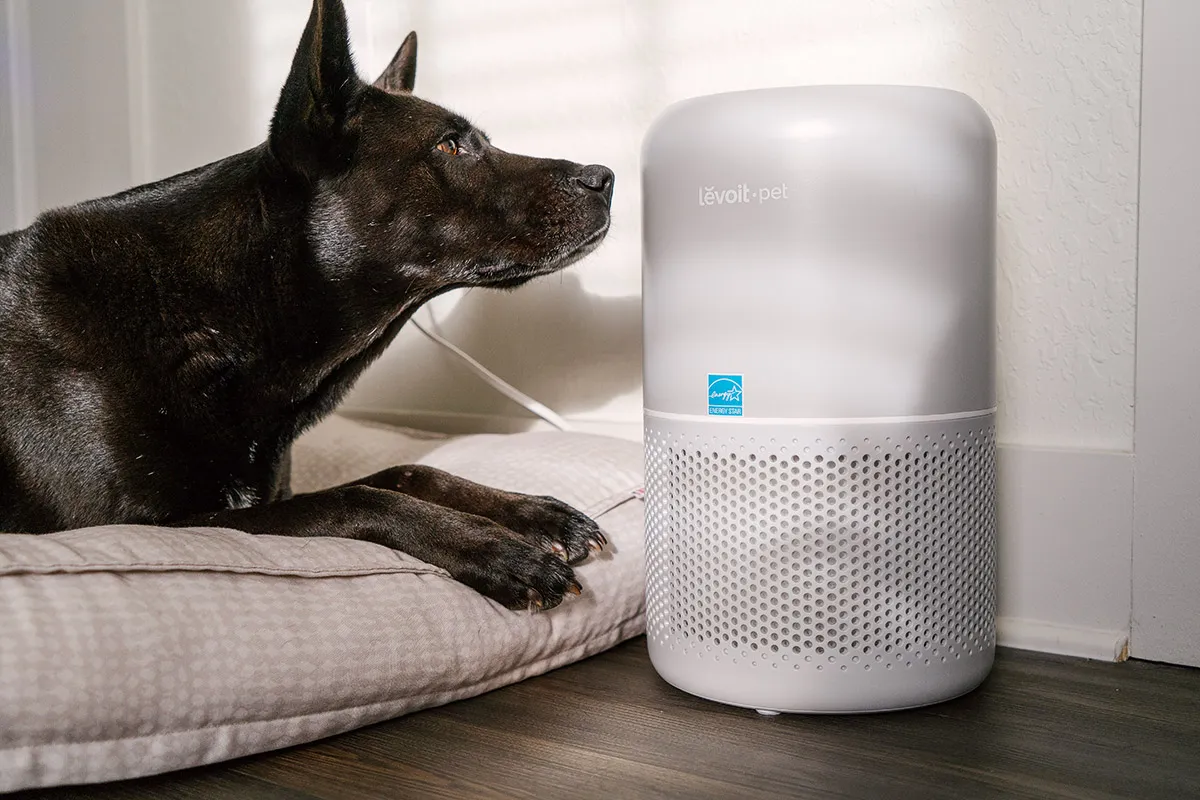
The Levoit Core series, particularly the 400S and 600S, are highly effective at combating tough pollutants like smoke and significant VOCs. With sophisticated three-layer filtration systems that include a True HEPA-like filter and an activated carbon filter, these models quickly lower pollutant levels in large rooms. They also feature smart capabilities and interactive LCD screens, providing real-time air quality data.
Maximizing Your Air Purifier’s Effectiveness
Even the best large room air purifier needs a little help to perform at its peak.
- Optimal Placement Tips: Place your air purifier in the room where you spend the most time, or where the air quality is most critical. Keep it at least one foot away from walls, furniture, and curtains to allow for optimal airflow. While some suggest placing it off the floor, the most important factor is unimpeded air intake and exhaust.
- Regular Filter Maintenance: Adhere to the manufacturer’s recommendations for cleaning pre-filters and replacing HEPA and carbon filters. Neglecting filter changes can significantly reduce efficiency and even recirculate trapped pollutants.
- Pairing with Good Habits: An air purifier is a powerful tool, but it works best when combined with good indoor air quality habits. Regular dusting and vacuuming, proper ventilation when cooking or cleaning, and minimizing indoor sources of pollution can greatly enhance the overall air quality in your large room.
Expert Insights: Beyond the Specs
“Investing in a high-quality air purifier for your large living spaces is more than just buying an appliance; it’s an investment in your family’s health and comfort,” says Dr. Anya Sharma, an Environmental Health Specialist. “The right unit not only removes allergens and pollutants but creates an environment where everyone can truly breathe easier and thrive.”
Frequently Asked Questions
How many air purifiers do I need for a large open-concept room?
For most large open-concept rooms, a single, powerful air purifier designed for that specific square footage is generally more effective and cost-efficient than running multiple smaller units. It centralizes air purification and simplifies maintenance.
What CADR rating is essential for a large room?
As a guideline, look for an air purifier with a CADR rating that is at least two-thirds of your room’s total square footage to ensure efficient purification. For example, a 750 sq ft room would benefit from a CADR of 500 or higher.
Can large room air purifiers effectively remove pet odors?
Yes, absolutely. For pet odors, ensure your chosen large room air purifier includes a robust activated carbon filter as part of its multi-stage filtration system. Activated carbon is specifically designed to absorb and neutralize odors.
Are smart features truly necessary for a large room air purifier?
While not strictly “necessary” for basic air purification, smart features like Wi-Fi connectivity, app control, and integrated air quality sensors offer significant convenience and enhanced efficiency. They allow for remote monitoring, automatic adjustments, and scheduling, making it easier to maintain optimal air quality without constant manual input.
How often should I replace the filters in my large room air purifier?
Filter replacement frequency varies by model and usage, but generally, True HEPA filters last 6-12 months, and activated carbon filters 3-6 months. Always consult your specific air purifier’s manual for recommended replacement schedules and consider your home’s unique air quality challenges.
Conclusion
Choosing the best large room air purifier is a crucial step towards creating a healthier, more comfortable living environment. By understanding key metrics like CADR and ACH, evaluating different filtration technologies, and considering smart features and maintenance, you can confidently select a unit that perfectly matches your home’s needs. CleanAir Home is dedicated to empowering you with these solutions, ensuring every breath you take is a breath of pure, invigorating air. Make the informed choice today and experience the transformative power of truly clean indoor air.