There’s a unique, invigorating scent that often lingers after a summer thunderstorm – a crisp, clean aroma that makes you want to breathe deeply. This powerful sensory experience has led many to seek out air purifiers that promise to recreate that “thunderstorm fresh” feeling right in their homes. But what exactly is a “Thunderstorm Air Purifier,” and does it truly deliver on the promise of cleaner, healthier indoor air? The answer is more nuanced than you might expect, delving into the science of nature’s air purification and the potential pitfalls of trying to replicate it artificially.
The allure of a “thunderstorm air purifier” often stems from our perception of that post-storm freshness. It’s natural to associate that smell with purity, leading to the idea that a device mimicking it must be superior. However, understanding the difference between a pleasant aroma and genuinely clean air is crucial for your health and well-being. This article will help you navigate the claims, unpack the science, and empower you to make informed decisions for a truly healthier home environment.
The Science Behind That “After-Storm” Freshness
That distinct scent after a thunderstorm is a fascinating cocktail of natural phenomena. One of the primary contributors to the “clean” smell is ozone (O3), a molecule composed of three oxygen atoms. Lightning, with its immense electrical energy, can split nitrogen and oxygen molecules in the atmosphere. These freed oxygen atoms can then bind with other oxygen molecules to form ozone. Our noses are incredibly sensitive to ozone, capable of detecting its pungent, often chlorine-like smell even at very low concentrations. It’s this natural, transient ozone that often precedes or follows a heavy storm, contributing to the feeling of crisp, refreshed air.
Beyond ozone, the earthy, grounding scent known as petrichor also plays a significant role. This beloved aroma arises when rain falls on dry soil. It’s primarily caused by geosmin, a metabolic byproduct released by certain soil bacteria (actinomycetes) when they are disturbed by raindrops. Volatile plant oils, accumulated on dry surfaces, are also released into the air by rainfall, further enriching this natural perfume. While these elements combine to create a deeply satisfying scent, it’s important to remember that a pleasant smell doesn’t automatically equate to comprehensive air purification.
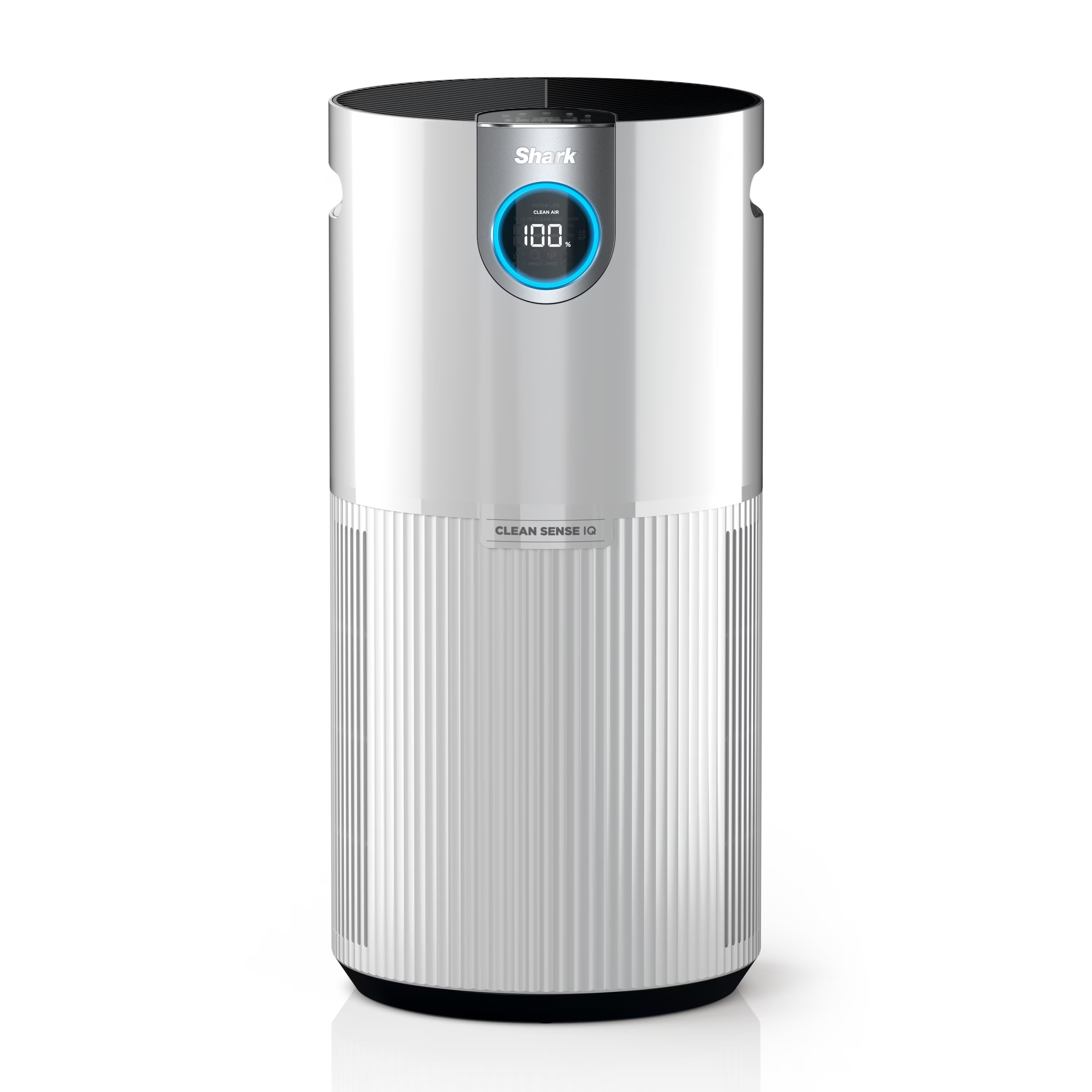
What Exactly is a “Thunderstorm Air Purifier”?
When a product is marketed as a “thunderstorm air purifier,” it typically refers to devices that aim to emulate the post-storm environment by generating ozone, negative ions, or a combination of both. These devices often claim to destroy odors, kill bacteria and viruses, and make your indoor air feel “fresh and clean.” Manufacturers often use terms like “activated oxygen” (referring to ozone) and “plasma technology” (referring to ion generation) to describe their mechanisms. The promise is to bring the purifying power of a thunderstorm indoors, offering a seemingly revolutionary solution to indoor air pollution.
However, the reality of these devices requires closer examination. Unlike traditional air purifiers that physically capture pollutants through filters, “thunderstorm air purifiers” primarily rely on chemical reactions (ozone) or electrostatic charges (ions) to address airborne contaminants. This fundamental difference is key to understanding their effectiveness and, more importantly, their potential risks.
Ozone Generators: The Double-Edged Sword
Ozone generators, often at the heart of “thunderstorm air purifiers,” work by actively producing ozone. The principle is that ozone, being a powerful oxidizing agent, will react with and break down pollutants, odors, bacteria, and viruses in the air. In theory, this sounds like an effective way to sanitize and freshen indoor environments. Companies marketing these products often highlight their ability to eliminate stubborn odors from pets, smoke, or cooking, and to neutralize pathogens without the need for traditional filters.
Yet, the very property that makes ozone an effective oxidizer also makes it a significant health hazard when inhaled. Ozone doesn’t discriminate; it can oxidize contaminants in the air, but it can just as easily oxidize delicate lung tissue, leading to irritation, inflammation, and respiratory problems. Symptoms can range from coughing, throat irritation, and chest discomfort to more serious conditions like exacerbated asthma or even premature death with long-term exposure. Regulatory bodies, such as the U.S. Environmental Protection Agency (EPA), strongly advise against using ozone generators in occupied spaces due to these risks. Furthermore, high ozone levels can react with other common indoor chemicals, potentially creating even more harmful secondary pollutants, essentially creating indoor smog. States like California have even banned the sale of ozone-generating air purifiers for home use due to these well-documented dangers. The “clean” smell ozone produces might feel fresh, but it masks a chemical irritant that is actively harming your respiratory system.
Negative Ionizers: Clearing the Air, or Just Settling It?
Another technology frequently featured in “thunderstorm air purifiers” is the negative ionizer. These devices work by emitting negatively charged ions into the air. These ions then attach to airborne particles like dust, pet dander, pollen, and smoke, giving them an electrical charge. Once charged, these particles become heavier and are attracted to oppositely charged surfaces, such as walls, floors, furniture, or collector plates within the device itself, causing them to fall out of the breathing space.
While ionizers can reduce airborne particle counts, their effectiveness and safety are subjects of ongoing debate. The primary criticism is that they don’t remove pollutants from your home; they merely relocate them. Instead of capturing contaminants in a filter, ionizers push them onto surfaces where they can be easily disturbed and re-suspended into the air. This can lead to increased visible dust on furniture and even “black streaking” on walls, indicating where charged particles have settled. Moreover, ionizers are generally ineffective against gases, odors, and volatile organic compounds (VOCs). A significant concern is that many ionizers produce ozone as a byproduct, even if at low levels, contributing to the indoor ozone burden and its associated health risks. Some studies have even raised questions about potential negative impacts on cardiac health from high ion concentrations, although more research is needed. Furthermore, the Clean Air Delivery Rate (CADR) of ionizers can be artificially boosted in lab tests, making their real-world performance seem better than it actually is. It’s a method that often prioritizes perception over genuine and lasting purification.
True Clean Air: The CleanAir Home Approach
At CleanAir Home, our philosophy is rooted in providing solutions that deliver verifiable clean air without compromising your health. We believe in proven, reliable technologies that effectively remove a broad spectrum of indoor air pollutants, ensuring a truly healthy environment for your family. This is why we champion advanced multi-stage filtration systems that prioritize safety and efficacy above all else.
Central to our approach is HEPA (High-Efficiency Particulate Air) filtration. A true HEPA filter is designed to capture 99.97% of airborne particles as small as 0.3 microns. This includes common allergens like pollen, dust mites, pet dander, and mold spores, as well as bacteria and even some viruses. Unlike ionizers that only push particles onto surfaces, HEPA filters physically trap these contaminants, permanently removing them from your breathing air. This mechanical filtration process is safe, effective, and does not produce any harmful byproducts like ozone.
Complementing HEPA filtration, we integrate activated carbon filters. These filters are essential for tackling gaseous pollutants, odors, and volatile organic compounds (VOCs) that HEPA filters cannot capture. Activated carbon’s porous structure effectively absorbs molecules responsible for cooking smells, pet odors, smoke, and chemicals emitted from household products, paints, and furnishings. Together, HEPA and activated carbon filtration provide a comprehensive solution that addresses both particulate and gaseous pollutants, delivering truly clean and fresh air without any health compromises.
Choosing Your Air Purifier Wisely
Navigating the air purifier market can be challenging, but understanding the core technologies and their implications can empower you to make the best choice for your home. When evaluating air purifiers, look for:
- True HEPA Filtration: This is the gold standard for particle removal. Always verify that a device specifies “True HEPA” or meets the HEPA standard, not just “HEPA-type” or “HEPA-like” filters, which may not offer the same level of performance.
- Activated Carbon: Essential for removing odors, gases, and VOCs. The more activated carbon, the better its capacity for absorption.
- CADR (Clean Air Delivery Rate): This metric indicates how quickly the purifier cleans a room of specific pollutants (smoke, dust, pollen). A higher CADR means faster cleaning.
- Coverage Area: Ensure the air purifier is appropriately sized for the room you intend to use it in.
- Certifications: Look for certifications from reputable third-party organizations that test and verify performance and safety, ensuring the device meets stringent air quality standards.
Conversely, be wary of devices that primarily rely on ozone generation or promise a “fresh scent” through nebulous “thunderstorm” or “activated oxygen” technologies without clear, safe filtration methods. As Dr. Evelyn Reed, a renowned environmental health specialist, advises, “The feeling of fresh air is wonderful, but it must come from genuine purification, not from a chemical reaction that creates another pollutant. For real health benefits, always prioritize mechanical filtration and validated science over marketing claims of ‘natural freshness’ that often involve harmful ozone.”
Beyond the Gadget: Holistic Indoor Air Quality
While a high-quality air purifier is a powerful tool, achieving optimal indoor air quality is a holistic endeavor. It’s not just about what you filter out, but also what you prevent from entering or generating in the first place. Consider these practices to enhance your home’s air quality:
- Ventilation: Regularly open windows and doors to allow fresh outdoor air to circulate, especially after cooking, cleaning, or during activities that generate pollutants.
- Humidity Control: Maintain indoor humidity levels between 30-50% to deter mold and dust mite growth.
- Regular Cleaning: Dust and vacuum regularly with a HEPA-filtered vacuum cleaner to minimize settled particles.
- Source Control: Address pollution sources directly. Use exhaust fans in kitchens and bathrooms, choose low-VOC paints and cleaning products, and avoid indoor smoking.
- Pet Care: Groom pets regularly to reduce dander, and wash pet bedding frequently.
By combining the power of a superior air purification system with conscientious living habits, you create a comprehensive strategy for safeguarding your indoor environment.
Conclusion
The idea of a “thunderstorm air purifier” appeals to our desire for fresh, clean air, echoing the invigorating scent after a natural storm. However, it’s vital to distinguish between the sensory experience of natural ozone and geosmin, and the artificial generation of potentially harmful ozone by certain devices. While the natural “after-rain” smell is largely harmless, commercially produced ozone and ionizers carry significant health risks and often fall short of providing comprehensive air purification.
At CleanAir Home, our commitment is to your health and peace of mind. We advocate for air purification solutions that are scientifically proven, safe, and effective, relying on advanced HEPA and activated carbon filtration to genuinely remove pollutants from your indoor environment. By understanding the technologies, recognizing potential hazards, and embracing a holistic approach to indoor air quality, you can make truly informed decisions, ensuring your home is a sanctuary of clean, breathable air, not just a place that smells “fresh.” Choose wisely, and breathe freely.